
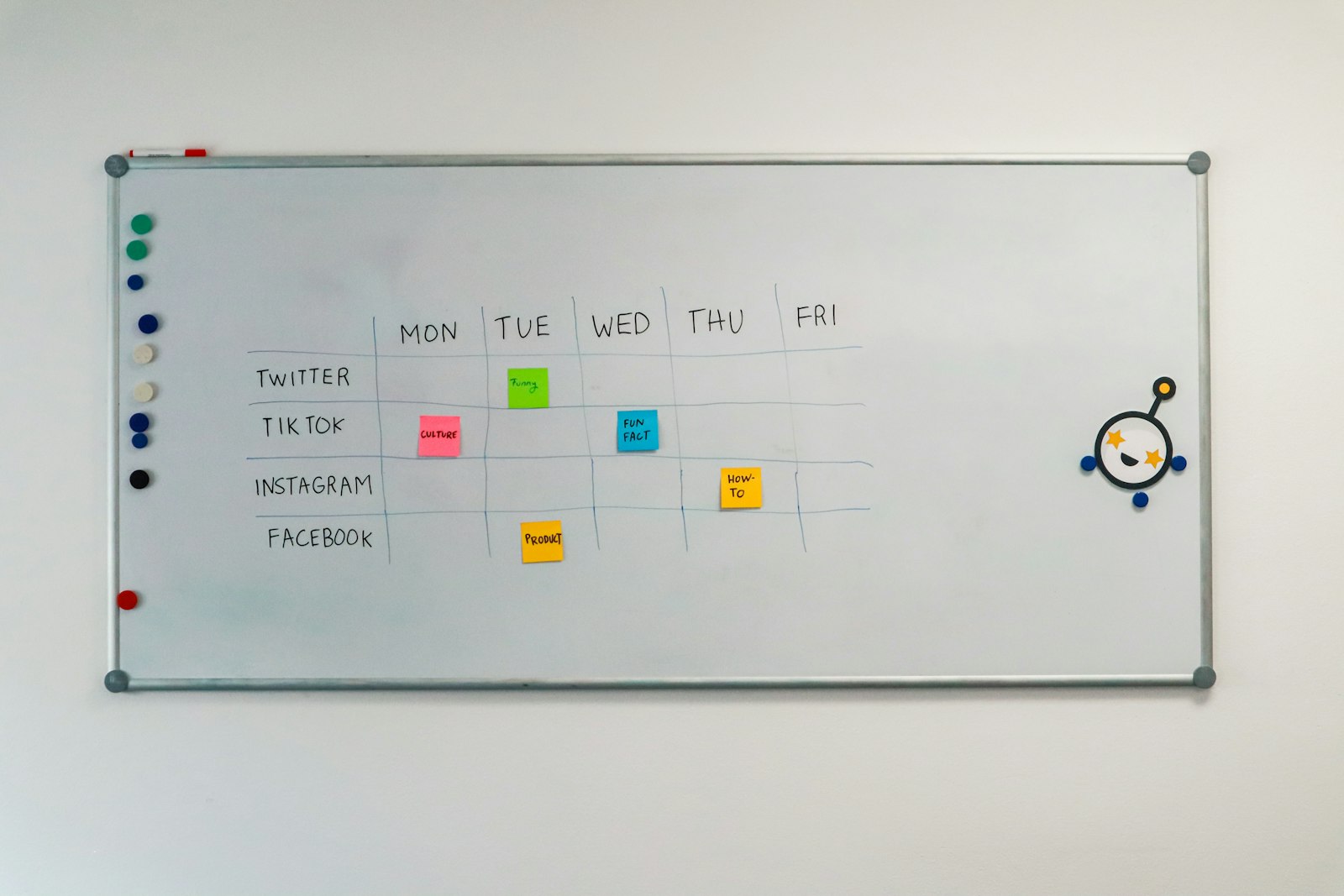
An action plan template is the missing link between the goals you set in January and what your team actually does on a Tuesday in May. Most owners are good at setting goals, though. The trouble starts afterwards, when “grow Gauteng sales by 20%” meets a full inbox, a late delivery and a staff member off sick.
Goals don’t fail in the boardroom. They fail in the week, because nobody broke them down into tasks with names and dates attached.
This guide gives you a simple template you can copy into a spreadsheet today, a worked example for a Joburg distributor, and a weekly routine that keeps the plan moving without you chasing everyone.
Why goals stall without an action plan
Picture the typical pattern. The leadership team agrees five goals at the annual planning session. Everyone leaves energised. However, the energy fades fast. Six weeks later, three goals have had no work done on them, and the other two are running on the owner’s personal effort.
This isn’t about lazy people. Usually, nobody knows exactly what’s expected of them. Gallup found that only about half of employees strongly agree they know what’s expected of them at work. The same analysis found that 38% of employees are engaged when they strongly agree their manager helps them set work priorities. When they disagree, just 4% are engaged.
Coordination, meanwhile, is the other gap. Research in Harvard Business Review covering nearly 8,000 managers found that only 9% say they can rely on colleagues in other functions all the time. So if a goal needs sales, operations and finance to work together, it needs a written plan that shows who’s doing what.
A good action plan therefore fixes both problems. It makes expectations visible, and it shows the hand-offs between teams.
What goes into an action plan template?
Keep it simple. A template with twenty columns won’t get updated. Instead, these eight columns cover what an SME actually needs.
| Column | What to write | Why it matters |
|---|---|---|
| Goal | The quarterly or annual goal this action supports | Links daily work to strategy |
| Action | A specific task, starting with a verb | “Call” or “draft” is clear; “look into” is not |
| Owner | One person’s name | Shared ownership means no ownership |
| Start date | When work begins | Stops everything starting “next week” |
| Due date | A real date, ideally a Friday | Gives the weekly review something to check |
| Measure of done | What finished looks like | Avoids “90% done” for three months |
| Status | Not started, on track, at risk, done | Shows problems early |
| Notes and blockers | What’s in the way, who can help | Turns the review into problem-solving |
If you already use a RACI chart, the Owner column is simply the “Responsible” person. Only one name goes in it, though, even when several people help.
How to turn business goals into weekly tasks
Here’s the process we recommend. It also works whether you have one goal or ten.
- Start with a clear goal. It should be specific and measurable. If it isn’t, fix that first using our SMART goals examples for business.
- List the milestones. What must be true at the end of each month for the goal to be hit? Aim for three to five milestones per quarter.
- Break milestones into tasks. Each task should take no more than a week or two. If it takes longer, split it.
- Assign one owner per task. Then check the load. One manager with 23 open tasks is a warning sign.
- Put dates on everything. Work backwards from the milestone, and leave a buffer for month-end and public holidays.
- Agree the measure of done. For example, “Price list approved by owner and sent to all reps”, not “work on pricing”.
- Book the weekly review. Same day, same time, 20 to 30 minutes.
The last step matters most. Without it, the plan becomes a document instead of a habit.
Action plan template example: a Joburg distributor
Take a typical Joburg distributor of cleaning and hygiene products. It has 60 staff and R85 million in turnover. One of its goals for the quarter is to win 12 new corporate accounts in the Pretoria and East Rand area, adding R400,000 in monthly sales.
Here’s how the first few weeks of its action plan might look.
| Action | Owner | Due | Measure of done | Status |
|---|---|---|---|---|
| Build a target list of 80 office parks, schools and clinics | Thandi (sales manager) | Fri, week 1 | List in CRM with contact names | Done |
| Update the corporate price list and payment terms | Pieter (finance) | Fri, week 2 | Approved by owner, loaded in system | On track |
| Create a one-page proposal and case study | Thandi | Fri, week 2 | PDF approved and shared with reps | On track |
| Confirm delivery capacity for extra East Rand routes | Sipho (operations) | Fri, week 3 | Route plan with vehicle and driver costs | At risk |
| Book 20 site visits | Two sales reps | Fri, week 4 | 20 visits in the diary | Not started |
| Review win rate and adjust pitch | Owner and Thandi | Fri, week 6 | Decision minuted at weekly review | Not started |
What the example shows
Look at the “At risk” row. Operations can’t confirm extra routes until it knows the new vehicle costs. Because it’s written down, the owner sees it in week two, not in week eight when a new client complains about late deliveries.
Also notice that each row has one name. The two reps share one task, but their manager is accountable for the site visits being booked.
Do goals in your business regularly lose momentum after the planning session? Take the free Business Health Check. It takes about 3 minutes and shows how your execution and accountability compare with the rest of your business.
Run a weekly action plan review
A plan only works if someone looks at it. Still, the review doesn’t need to be long.
FranklinCovey’s 4 Disciplines of Execution uses a weekly meeting of no more than 20 minutes. In it, each person reports on last week’s commitments, checks the scoreboard and commits to the one or two most important things for the coming week. You can easily borrow the same shape, even without the full method.
- First five minutes: Scan the plan for anything overdue or at risk.
- Next ten minutes: Each owner gives a short update on their tasks only.
- Final five minutes: Agree how to clear blockers, then confirm next week’s priorities.
There’s solid research behind the habit. A meta-analysis in Psychological Bulletin covering 138 studies and 19,951 participants found that monitoring progress helps people reach their goals. In fact, the effect was stronger when progress was physically recorded or reported publicly. A shared plan reviewed each week does both.
Keep deeper discussions for your one-on-ones. Our one-on-one meeting template shows how to handle coaching and workload there, so the weekly review stays short.
Mistakes that make action plans fail
Most failed plans share a handful of problems. Here are the ones to watch especially closely.
- Too many goals. If everything is a priority, nothing is. For most SMEs, three to five goals per quarter is plenty.
- The owner owns everything. If your name appears on half the rows, you’re the bottleneck. Delegate the task and keep the review.
- Vague actions. “Improve marketing” can’t be finished. “Send the March newsletter to 1,200 customers” can.
- No link to the numbers. Tasks should move a measure you track, such as sales, margin or delivery times.
- Dates that slide quietly. Moving a due date is fine. However, it should be a decision in the review, not a silent edit.
- Living in someone’s laptop. If only one person can open the file, it isn’t a team plan.
Accountability has also become harder, not easier. Gallup’s 2026 State of the Global Workplace report found that global employee engagement fell to 20% in 2025, while manager engagement dropped to 22%. A clear plan and a steady weekly rhythm give stretched managers less to guess about.
Spreadsheet or software for your action plan?
A spreadsheet is a fine place to start your action plan template. It’s free, everyone knows how to use it, and it forces you to keep things simple.
That said, spreadsheets tend to break down once you have more than 30 or 40 live actions, several managers and goals that span teams. Versions multiply, nobody knows which file is current, and the owner ends up rebuilding the picture before every meeting.
At that point, a system that links goals, actions and KPIs in one place saves real time. It also gives you a history of what was done, which helps at quarter-end and when you run a quarterly business review.
Frequently asked questions
What should an action plan template include?
At minimum, include the goal, the specific action, one owner, a start date, a due date, a measure of done and a status. A column for notes and blockers is also useful. Keep it to one page or one sheet per goal, so managers can update it in a few minutes each week without needing training.
How do you write an action plan for business goals?
Start with a specific, measurable goal. Then list three to five milestones for the quarter, and break each milestone into tasks of one to two weeks. Give every task one owner, a due date and a clear definition of done. Finally, book a short weekly review to check progress and clear blockers.
What is the difference between an action plan and a strategic plan?
A strategic plan sets direction: where the business is going over three to five years and the few big goals that will get it there. An action plan, by contrast, is the practical layer underneath. It lists the tasks, owners and dates for the next few weeks or months, so the strategy turns into daily work.
How often should you update an action plan?
Update it every week, ideally just before a short team review, so owners mark progress and flag blockers. Add new tasks as milestones approach, rather than planning every task for the year up front. Then, each quarter, check the plan against your goals and results, and reset priorities for the next 90 days.
Your next step: build this week’s plan
Pick one goal for this quarter. Open a spreadsheet, copy the eight columns above and write the first ten actions with owners and dates. Then book a 20-minute review for the same time next week. After that, just keep the rhythm going.
If you’d like a clear view of where execution stalls in your business, take the free Business Health Check. If you want help building an action plan and a weekly rhythm your team will stick to, book a 30-minute call, or see how Edvysor for SMEs connects your goals, actions and KPIs so nothing slips through the cracks.
Last updated: 24 September 2026
